The Logic of Grief in Loss

When a person who usually thinks in a rational and logical way loses someone they love, or when they carry grief caused by some form of loss, their vitality often declines. In such moments, they may begin to perceive the world more through emotion than through reason, and tend to act based on feelings rather than strict logic.

This may be because there is little sense of “salvation” or emotional relief within a system built entirely on flawless logic.
The Wind Phone evokes ideas such as “seeing what cannot be seen,” “hearing what cannot be heard,” and “being able to connect anywhere because the line is not actually connected.” These are not logical concepts, yet they allow people to feel that perhaps something impossible could still be true, or that something unrealistic might still be wished for. In this vagueness, people find dreams, hope, and comfort.

However, this time, I would like to deliberately consider the sorrow of loss in a logical way, and explore a path toward renewal.

The death of a loved one naturally brings sadness, because emotionally we do not want them to be gone. Between two people, there exists the idea of “relational existence”—the sense that one’s own self is supported by the presence of the other.

From a logical perspective, to lose a loved one means that the meaning of one’s “self-existence” is diminished, because human beings are, in many ways, sustained by others. Therefore, in order to heal grief, it may be necessary to build new forms of “relational existence”—relationships in which one’s own presence is acknowledged and understood by others.

Of course, replacing a loved one with another person is extremely difficult, and it will not be easy. Yet, I believe there is no other path toward one’s own recovery except to devote energy to forming new relationships.

We do not live alone from the moment we are born. We live within relationships—between people, and between ourselves and nature. How we create these relationships will determine what the next stage of life will look like.

I believe that the severing of relationships may become the turning point between falling into depression and choosing to live a new life. Once we emotionally grasp, accept, and come to terms with what has happened, we must shift our thinking logically and connect it to the next step forward in life.

Psychological Changes Among Users of the “Wind Phone”

A woman visited the “Wind Phone” every day for six consecutive days starting in early September. She is currently studying at a Japanese university from Germany and shared that her mother had passed away from cancer.

Each time she came to the “Wind Phone,” she cried. She shed many tears…

People often visit the “Wind Phone” when their hearts are heavy with loss or grief, unable to process their feelings. While some initially find it difficult to express emotions that are hard to put into words, they often feel their hearts grow lighter with each visit, allowing them to heal at their own pace.

Speaking into the receiver helps organize and lessen inner emotions, bringing a sense of relief and liberation from having conveyed what they couldn’t say before.

Users can ease their loneliness and heartache by safely talking about the sadness and regret they had been carrying alone in the space provided by Kaze no Denwa for dialogue with the deceased.

Through the Kaze no Denwa experience, “conveying feelings that could not be communicated to the other person” provides closure and a sense of relief, encouraging a process of regaining a positive outlook and hope for life.

This psychological change has attracted professional attention as a form of grief care, and many users say that the Wind Phone reduces their psychological burden and provides an opportunity to form new emotional connections.

In this way, the Wind Phone is a place where visitors can visualize the invisible connections in their hearts, and it has become an important place that promotes the process of healing and regeneration of the heart.

The Power of “the Place” Where the “Wind Phone” Stands

When the media reports on the “Wind Phone,” they often focus on the moving scenes of people clutching the disconnected black telephone, tearfully pouring out their unsaid feelings to a loved one they could no longer meet, unable to convey their thoughts. However, at the actual sites of the “Wind Phones,” the scenes are different. People who have lost family or friends to sudden disasters, accidents, or suicide—those who make it to the phone booth but cannot bring themselves to open the door, those who open it but cannot lift the receiver, those who speak for long periods about feelings they couldn’t express, those who hold the receiver without speaking, just shedding tears—the sight of people quietly facing those they long to see but cannot reach never ceases.

The “Wind Phone” should be seen as a place where people confront their painful pasts and present while looking forward, striving to overcome them and walk toward the future. We fear that if it is viewed merely as an outlet for grief or as a media stunt for attention, its true essence will be missed.

Though they cannot actually speak on the phone, those who have finished their time there say: say things like, “It felt like it was reaching the other side,” or “I could sense someone there.” If it truly feels like they were able to speak, if it eases their heart, heals them, and makes them feel saved, then for that person, isn’t it the same as having truly spoken?

I believe that our act of humbly accepting something beyond human understanding, speaking words to the departed who can no longer hear us, and sensing what should be inaudible, is both literary and akin to faith or prayer. In other words, we shouldn’t judge things solely by isolating parts and declaring them good or bad, useful or useless. Instead of dismissing them as “meaningless because the phone line isn’t connected” or “it’s impossible to talk to the dead,” when we use our imagination to contemplate what lies behind things, value emerges from the seemingly meaningless, and the essence of things becomes visible.

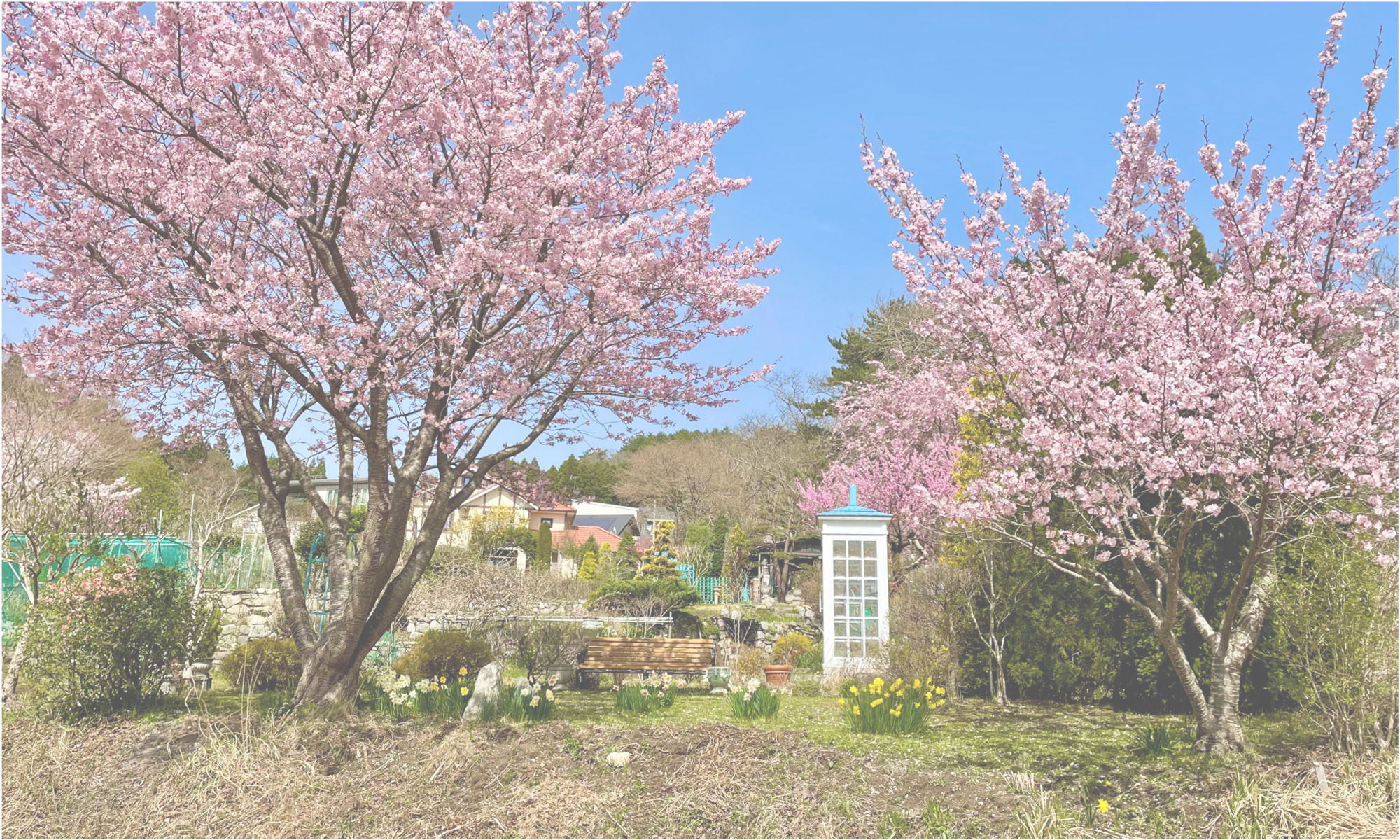
Furthermore, considering the concept of Bergeria Kujiyama, where the Wind Phone is located, as a place that “nurtures sensitivity and imagination,” with its Forest Library for children and Kikki Forest playground, we hope that it will be understood as a place that supports the attitude of people carrying grief, who are carving out a future for themselves, as well as the aspect of the Wind Phone that is conveyed to society at large.

The Background of the Birth of the “Wind Phone”

As I’ve written many times before, I believe that “everyone is living the story of their life.”

We hold dreams and hopes for our own lives and strive daily to make them a reality. However, until they are realized, they remain fiction and illusion. In other words, since they are made-up stories, we can view them as narratives akin to novels or movies.

Family, lovers, and many friends and acquaintances are involved in shaping this story. When someone within it passes away, the story is interrupted, and we grieve while agonizing over how the story will unfold from there.

To fill the void of that loss, we need a new story—one where we can “meet the departed again” or “reconnect with them.”
Gripping the black telephone in “The Wind’s Phone” and engaging in self-questioning allows one to briefly reclaim those severed days. It leads to reflecting on the story up to that point and reconsidering the cause of the grief, helping to organize thoughts about “what exactly is sad and what exactly is painful.”

This is a rediscovery of the self, achieved through the expression of the deep-seated self-awareness within the heart in the form of words. It makes one conscious of the unfolding of a new story. I believe this generates the life force we call “rebirth.”

If we thought that because someone has died and lost their form, we could no longer convey our feelings, the Wind Phone would never have been born.

During my twelve years living in the mountains, I experienced connecting thoughts with animals and plants that don’t speak human language. However, I came to believe that conveying feelings to someone who speaks human language but has passed away requires a different kind of sensitivity than the emotional exchange with animals and plants.

Human lifespans range from 80 to 100 years. Whether one views this as short or long is subjective. Yet, when considering the time spent living versus the time after death, the latter holds an eternity, making us acutely aware of life’s brevity. Therefore, I believe it is crucial to maintain bonds not only during life but also after death.

The Wind Phone was born from the idea that just because something has no physical form doesn’t mean it has vanished. By considering the deceased as still existing, we can connect with them and share our thoughts.

Human “life” and “death” are connected along a straight line, with “death” lying on the extension of “life.” Furthermore, considering that “all things in the world are connected in some way,” ‘life’ and “death” should likewise be seen not as separate entities but as interconnected. This is why I believe the Wind Phone makes it possible to connect thoughts with those who have passed away.

Why do people from all over the world visit “the Wind Phone”?

For about three years now, the number of foreigners visiting the Wind Phone has been increasing. Since last year, this trend has become even stronger. Looking at the blog, half of the visitors are from overseas, including the United States, the United Kingdom, France, Germany, Singapore, Hong Kong, Australia, Taiwan, China, New Zealand, and other countries. Why is this happening to many foreigners who are considered logical and rational?

When we lose a loved one, the sadness is universal, regardless of country or era. And the desire to connect with the person we lost, to convey our feelings, to reconnect, and to start over again is the same. If we were to cut off all connection because they passed away, all that would remain is sadness and despair. The belief that we can still connect with the deceased gives those left behind dreams and hope for the future. Connecting with the deceased in our thoughts is so important, and it makes us realize the weight and preciousness of life.

When people are grieving and their vitality is low, they tend to think with their emotions and act on their feelings rather than with logical reasoning. This is because they believe that there is little room for the “salvation” that human emotions seek in a structure built on flawless logic.

The Wind Phone allows us to see the invisible, hear the inaudible, connect anywhere because there are no phone lines… Even if these things are impossible, it is important to feel that we can have vague dreams and hopes, saying things like, “I wish it could be like this,” or “I know it’s impossible, but maybe there’s a way,” rather than thinking logically.

When considering life in the real world, being “ambiguous” and vague actually allows for more rational judgment and response. If this world were truly black or white, left or right, we wouldn’t suffer, grieve, or despair.

Even logical, rational foreigners, when they lose someone they love, still seek “salvation” in something. Perhaps they find that ‘salvation’ in the “ambiguous rationality” that Japanese people possess.

As of March this year, over 300 “Wind Phones” have been installed worldwide. I believe this fact speaks to the power of the “ambiguous rationality” inherent in the Wind Phone.