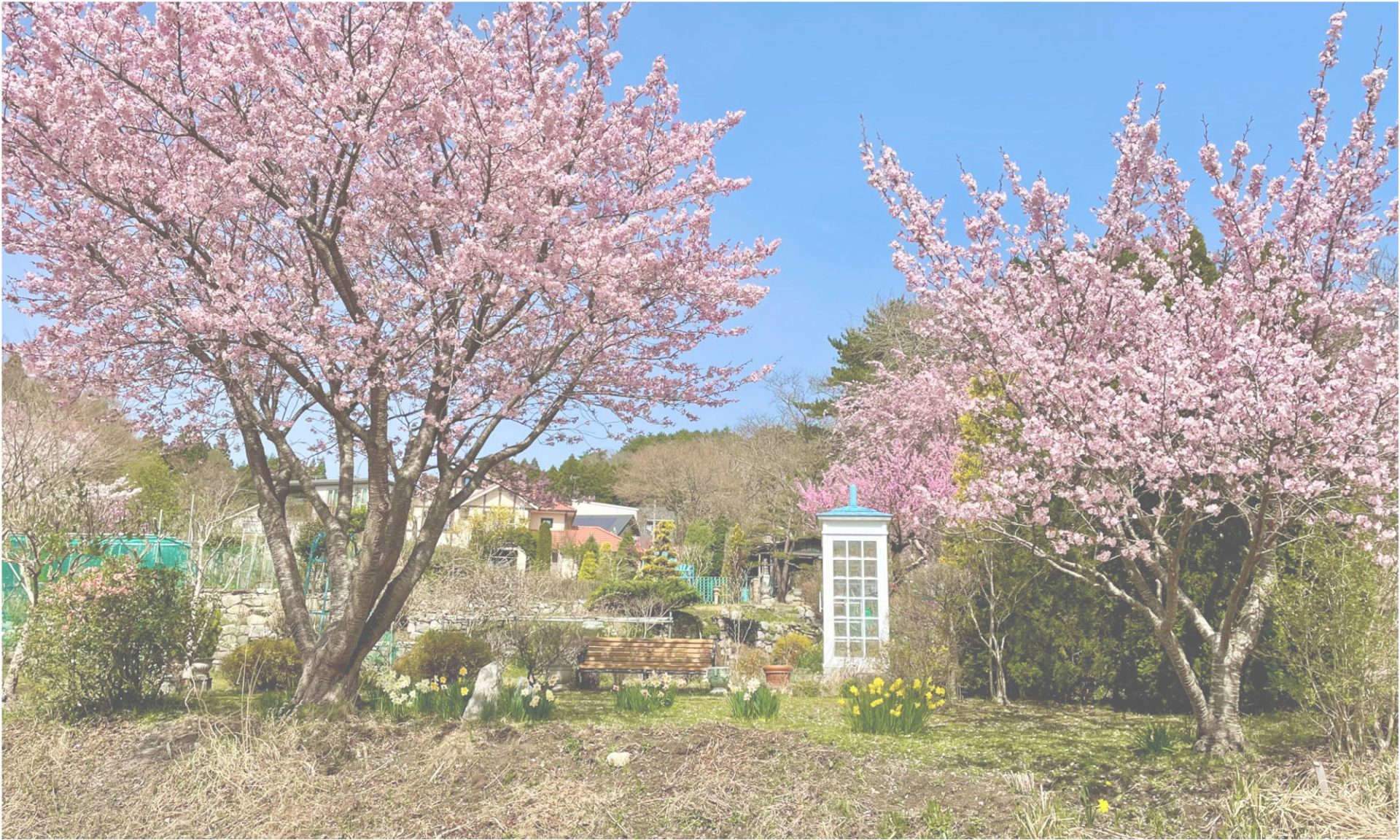
Why do people from all over the world visit “the Wind Phone”?

For about three years now, the number of foreigners visiting the Wind Phone has been increasing. Since last year, this trend has become even stronger. Looking at the blog, half of the visitors are from overseas, including the United States, the United Kingdom, France, Germany, Singapore, Hong Kong, Australia, Taiwan, China, New Zealand, and other countries. Why is this happening to many foreigners who are considered logical and rational?

When we lose a loved one, the sadness is universal, regardless of country or era. And the desire to connect with the person we lost, to convey our feelings, to reconnect, and to start over again is the same. If we were to cut off all connection because they passed away, all that would remain is sadness and despair. The belief that we can still connect with the deceased gives those left behind dreams and hope for the future. Connecting with the deceased in our thoughts is so important, and it makes us realize the weight and preciousness of life.

When people are grieving and their vitality is low, they tend to think with their emotions and act on their feelings rather than with logical reasoning. This is because they believe that there is little room for the “salvation” that human emotions seek in a structure built on flawless logic.

The Wind Phone allows us to see the invisible, hear the inaudible, connect anywhere because there are no phone lines… Even if these things are impossible, it is important to feel that we can have vague dreams and hopes, saying things like, “I wish it could be like this,” or “I know it’s impossible, but maybe there’s a way,” rather than thinking logically.

When considering life in the real world, being “ambiguous” and vague actually allows for more rational judgment and response. If this world were truly black or white, left or right, we wouldn’t suffer, grieve, or despair.

Even logical, rational foreigners, when they lose someone they love, still seek “salvation” in something. Perhaps they find that ‘salvation’ in the “ambiguous rationality” that Japanese people possess.

As of March this year, over 300 “Wind Phones” have been installed worldwide. I believe this fact speaks to the power of the “ambiguous rationality” inherent in the Wind Phone.

Why do bereaved families need a “Wind Phone”?

The depth of grief at the loss of a loved one is not easily understood except by those involved. This is because there is not only the result of the death, but also the process of living together, the passage of time, and history. For example, when we watch a sports game, we are moved by the result of the victory of the player or team we are cheering for. However, the players, coaches, and managers who actually fought in the game are moved differently from us ordinary spectators because they experienced not only the result but also the process of the game together with the players. In the same way, those of us who provide grief care must understand that the grief we feel is only a fraction of the grief of the people involved, even though we may think we understand it.

The grief caused by the loss of a loved one will not disappear no matter how much the surrounding circumstances change, as long as the fact of death remains unchanged. This is because it is the person who creates the situation of grief over the fact of death, and it depends on how the person himself or herself perceives the situation.

Therefore, we believe that it is basically a problem that the person concerned has to make an effort to overcome.

However, there are naturally some people who cannot cope with it. For them, there are specialists such as psychiatrists, psychosomatic physicians, psychosomatic medicine physicians, and clinical psychologists. In a different field, there are religious people who provide support for those seeking emotional healing and salvation.

In the case of Grief Care by Wind Phone, there is no one who can be called a psychotherapist. Nor are there any religious people. By having the grief sufferers face the phone and ask themselves questions about their own grief and suffering, they can objectively observe and sort out the facts that are causing their grief, thereby promoting acceptance, awakening their “self-healing power,” and gaining “awareness” of redirecting their own consciousness. It can be said to be psychotherapy (self-psychotherapy) in which the patient gains “awareness” of the cause of the grief by objectively observing and sorting out the facts.

Why do people who have lost a loved one need “Wind Phone”?

There is a very human reason. In the process of accepting the reality of the loss of a loved one, one needs a “wind phone” to ask oneself “How can I cope with the death of a loved one? Because they cannot accept the reality of their loved one’s sudden disappearance, they somehow try to talk with the “wind phone” and remember the person who is gone by using the “wind phone.


The 3rd Grief Care by “Wind Phone” hands-on seminar

Date: April 27, 2025, 13:00-16:00
Place: Belgardia Whale Mountain Forest Library
Fee: 5,000 yen (materials provided)
Number of participants: 8 or less (a reception for participants will be held after the seminar)

If you wish to attend, please contact Mr. Sasaki at Belgardia Kujirayama by April 20.
Phone: 0193-44-2544

“Wind Phone” is a therapy that does its own thing

When we are sick or injured, we go to a hospital to see a doctor for treatment or hospitalization. In this case, the patient wants to get back to normal and regain his/her life as soon as possible, so he/she obeys the doctor’s instructions and follows them to the letter.

On the other hand, what about the case of a person who has lost a loved one and is experiencing grief? As in the case of illness, the desire to be free from grief and suffering naturally arises. However, what about the reality? 15 years of “Wind Phone” activities have shown that many people continue to be immersed in a sense of grief, albeit unwillingly. After a long time, many of them realize that they cannot go on like this and feel they must somehow get out of this suffering. Or they may isolate themselves with their grief and fall into a state of depression. Grief is a state of “heartbreak” along with injury or illness. However, it cannot be cured by medicine or surgery. There are therapists, but it is important for the person concerned to have a strong desire to return to his or her original state of vitality.

Psychologist Dr. Hayao Kawai says, “It is the patient, not the doctor, who heals the wounds of the mind, and the only thing the doctor can do is to watch and help the patient heal by himself. The only thing that doctors can do is to watch over and help the patients heal on their own. (2) The person concerned must have a strong spirit for recovery. (3) Someone to stand by and watch over them and support them. The “Wind Phone” is a therapy that is conducted by oneself without a therapist, in which one becomes aware of one’s own self-healing power through self-questioning on a black phone.

The Japanese View of God and Buddha as Seen from “Wind Phone”

One person who came to the “Wind Phone” today left the following message. I felt for the first time that you are always there for me, even though I have nothing to say, and that you are always watching over me.

Most of the people who visit “Wind Phone” wish to say “Thank you” to their deceased ancestors, parents, family, friends, and acquaintances, and to ask them to continue to watch over them.

Originally, Japanese people believed that the gods were found in things and phenomena in nature, helping people in their daily activities or possessing them and causing illness and death. People have felt the presence of the gods, made requests to them, and held festivals to pray for their repose. Gradually, however, these deities were replaced by Shinto deities, along with the spirits of great historical figures. In the modern era, this trend has changed to the relationship with ancestors. One’s parents and ancestors do not die and leave one’s life, but they are there to watch over us even after death. The so-called trend toward the unification of Buddha and God is felt.

This trend is clearly expressed in the words that many people who have lost loved ones leave in their “Wind Telephone” notebooks.

Translated with DeepL.com (free version)

Grief care hands-on seminar by “Wind Phone” completed

On the afternoon of the 29th, a day of dazzling fresh greenery, the first “Grief Care by Wind Phone” seminar was held.

This seminar focused on how to reduce grief when experiencing loss, rather than on how to care for people with grief. In my experience and in talking with people who have visited “Wind Telephone,” I have found that the loss of a loved one is not perceived in a uniform way, and that there are many individual differences depending on each person’s life circumstances up to that point. I believe that this individual difference is due to the fact that each one of us has a “heart”.

To deal with the “heart,” we first need to know what the “heart” is. We believe that in order to heal a wounded heart, it is difficult to respond without knowing its reality. To do this, I believe that we must not treat “heart” as a concept in the abstract, but must replace it with a familiar word and deal with it in a realistic manner. I see mind = life force (energy).

Secondly, I believe that we must be prepared to face any sudden change in life or health one day in a calm manner. To this end, I believe that, as the term “advance recovery” suggests, and as with training in sports, it is important to train or prepare in advance in one’s personal and social life as well.

In support of this, we believe that the low self-esteem and self-affirmation of the Japanese people, as shown in UNICEF’s surveys of the well-being of countries around the world, aggravates and prolongs grief in the wake of loss. To this end, it is important to provide moral education from elementary school onward, and to raise awareness that death is an extension of life and coexists with it, without making the topic of death taboo for those who have entered the workforce. We believe that the key to reviewing our own way of life is to gain “awareness” from a number of things and change it ourselves. The opportunity to review one’s way of life crosses in front of one’s eyes at any time, when something happens, or when one sees or hears something. The seminar concluded that it is one’s usual sensitivity and attitude (motivation) that determines whether to seize these opportunities and make them one’s own vitality or just look at them sideways and let them pass by.